Victoria’s Gas Phase-Out, Explained: What’s Actually Changing by 2027 (and What Isn’t)
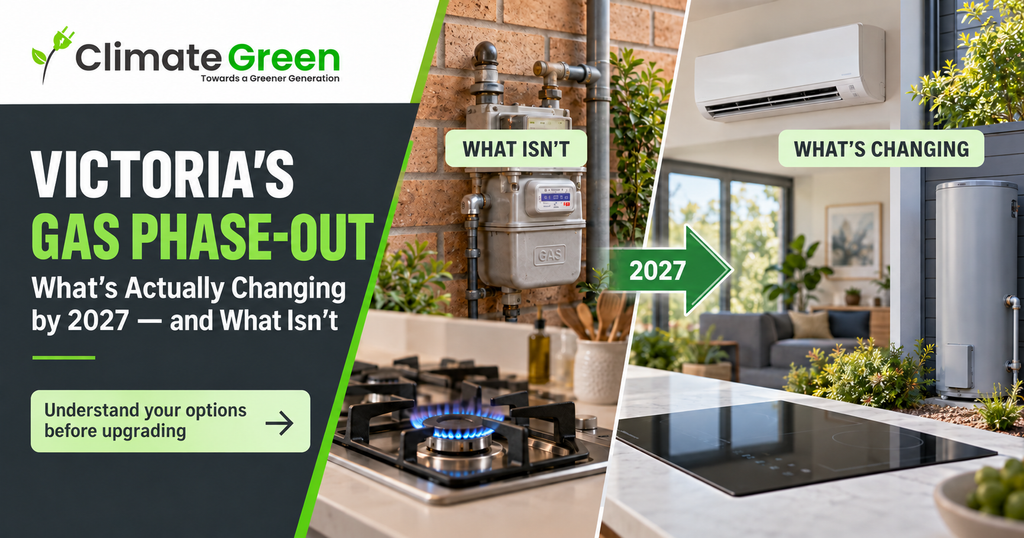
Victoria’s gas transition has been announced, clarified, and re-clarified enough times since 2023 that it’s genuinely confusing to keep straight. Here’s the current, accurate state of play as of late 2026 — what’s already in effect, what’s coming, and what several older articles get wrong by describing outdated timelines.
Already in effect: new home gas connections (since 1 January 2024)
New homes, apartment buildings and residential subdivisions that require a planning permit have not been able to get new gas connections since 1 January 2024. If your build needs a planning permit, it’s already all-electric — hot water, cooking, heating and cooling. This part isn’t changing; it’s already been the rule for over two years.
Coming in 2027: all new homes, no exceptions
From 1 January 2027, the rule extends to all new residential buildings and most new commercial buildings, regardless of whether a planning permit was required — no gas connections will be permitted at all. There’s a transition window: if your building permit is approved before 31 December 2026, you may still be able to connect gas under the old rules. After that date, new builds are all-electric by law.
Coming in 2027: existing homes, but only for hot water, and only at end-of-life
This is the part most often misreported. From 1 March 2027, if a gas hot water system in an existing home reaches the end of its life and can’t be safely repaired, it must be replaced with an electric alternative — typically a heat pump. That’s the only mandatory change for existing homes. There is no requirement to replace a working gas hot water system early, and no change at all to existing gas heating or gas cooking appliances. You can keep cooking on gas and keep your gas heater running and repairing it as needed — nothing forces you to disconnect an existing, working system.
Rental properties see an additional change from the same date: minimum energy efficiency standards begin phasing in for new tenancies, which will affect what landlords are required to provide going forward.
Why the state government is doing this
The policy sits under Victoria’s Gas Substitution Roadmap, aimed at the state’s net zero emissions target by 2045 (the same year the VEU program has now been extended to). The government’s own modelling cites potential household energy bill savings of roughly $880 a year for an all-electric home, or up to $1,820 a year with solar included — figures worth treating as government projections rather than a guarantee for every household, since actual savings depend on usage patterns and tariffs.
What this actually means for you, practically
- Building a new home in Victoria? It will be all-electric by law from 2027 regardless of what you’d prefer — plan your appliance choices (heat pump hot water, reverse-cycle heating and cooling, induction cooktop) from the design stage rather than as an afterthought.
- Existing gas heating or cooktop? No action required. Keep using and repairing it on a normal replacement cycle.
- Existing gas hot water system that’s getting old? This is the one appliance where forward planning genuinely pays off — arranging a heat pump replacement before it fails, on your own timeline and with current rebates, beats an emergency replacement after 1 March 2027 forces the decision for you.
- Landlord? Start budgeting for the minimum efficiency standards affecting new leases from March 2027, particularly around hot water systems.
More on this from Climate Green
| Post title | Full URL |
| Climate Green: Breathing Easier in Melbourne — A Look at Australia’s New Climate Targets | https://climategreen.com.au/climate-green-breathing-easier-in-melbourne-a-look-at-australias-new-climate-targets/ |
| The Future of Gas Connections: What Melbourne Homeowners Need to Know | https://climategreen.com.au/the-future-of-gas-connections-what-melbourne-homeowners-need-to-know-about-the-potential-ban-on-gas-in-new-and-existing-homes/ |
This document reflects program details and policy timelines believed accurate as of September 2026, drawn from the Department of Transport and Planning’s Gas Substitution Roadmap, the Essential Services Commission, and Solar Victoria. All figures and dates are subject to change — confirm current details before publishing or quoting a customer.