Turning Your Home into a Power Station with Virtual Power Plants
The way Australians generate and use electricity is changing rapidly. For decades, power flowed in just one direction—from large, centralised power stations to homes and businesses. Today, that traditional model is being reshaped by rooftop solar, home batteries, and smart energy technology.
At the centre of this transformation is the Virtual Power Plant (VPP)—a system that allows ordinary homes to work together like a single power station. With the right setup, your home can become an active contributor to the electricity grid, helping stabilise supply while potentially unlocking additional financial benefits.
What Is a Virtual Power Plant (VPP)?
A Virtual Power Plant (VPP) is a network of distributed energy resources—typically rooftop solar systems, home batteries, and smart energy controls—that are digitally connected and managed as one coordinated system.
Instead of relying solely on large power stations, VPPs aggregate the energy stored across hundreds or even thousands of homes. When combined, these individual systems function like a traditional power plant, capable of supplying electricity to the grid or reducing demand when needed.
In simple terms:
Your solar battery doesn’t just power your home—it can also support the wider energy network.
How Virtual Power Plants Work at Home
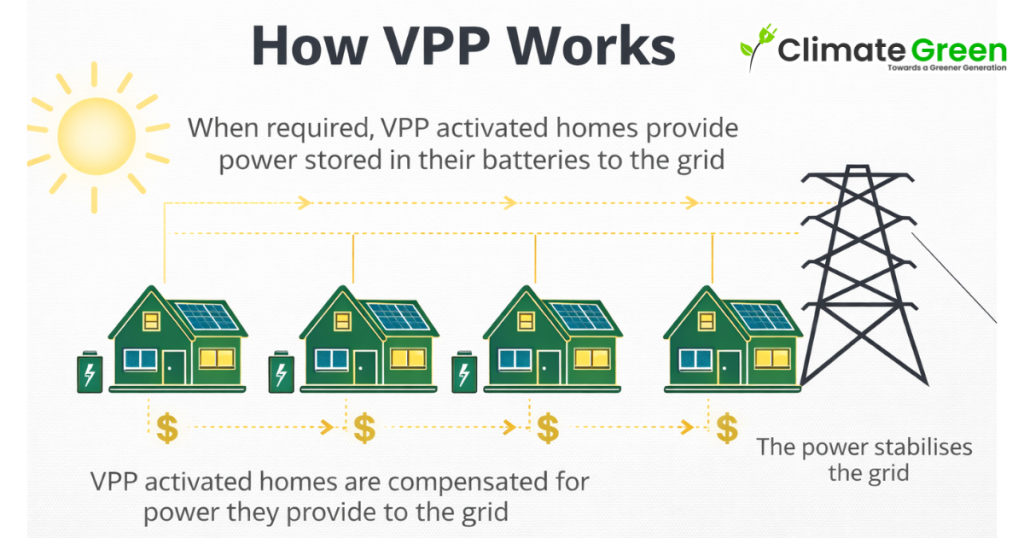
Here’s how a VPP typically operates in a residential setting:
- You have solar and a compatible battery
Your home generates solar energy during the day and stores excess power in a battery. - Your system connects to a VPP operator
Smart software links your battery to a VPP platform via the internet. - The grid responds to demand
During peak demand events—such as heatwaves or high electricity usage periods—the VPP operator can draw small amounts of stored energy from many homes at once. - Your home keeps running normally
You continue using your energy system as usual. Any charging or discharging is managed in the background according to agreed settings.
This coordinated response allows the grid to stay stable without firing up expensive and high-emission fossil fuel generators.
Why Virtual Power Plants Matter in Australia
Supporting Grid Stability
Australia has one of the highest rates of rooftop solar adoption in the world. While this is a huge positive for clean energy, it also creates challenges for managing supply and demand.
VPPs help by:
- Storing excess solar energy during the day
- Releasing stored energy during peak demand periods
- Reducing strain on the grid during extreme weather events
Because batteries respond almost instantly, VPPs can stabilise the grid faster than traditional power stations.
Enabling More Renewable Energy
Virtual Power Plants make it easier for renewable energy to play a bigger role in Australia’s electricity system. Instead of wasting surplus solar energy, VPPs allow that energy to be stored and used when it’s most valuable.
This supports:
- Reduced reliance on fossil fuels
- Better integration of renewables
- A more flexible and resilient energy network
Benefits of Joining a Virtual Power Plant for Homeowners
Households that participate in a VPP may experience several advantages, depending on the program:
Financial Incentives
- Credits or payments for exporting stored energy
- Improved returns on your battery investment
Smarter Energy Use
- Automated charging when solar is abundant
- Discharging when electricity prices or demand are high
Environmental Impact
- Contribute to cleaner energy
- Support Australia’s transition to a low-carbon grid
By joining a VPP, your home energy system moves beyond self-consumption and becomes part of a nationwide energy solution.
What You Need to Join a Virtual Power Plant
Before joining a VPP, it’s important to check a few key requirements:
Eligibility
Most VPP programs require:
- A grid-connected solar system
- A compatible home battery (often 5 kWh or larger)
- A smart meter and internet connectivity
Program Terms
Each VPP has different conditions, including:
- Minimum battery reserve (energy kept for your own use)
- Contract length or lock-in periods
- How and when payments are calculated
Battery Control
Joining a VPP usually means allowing limited external control of your battery. If blackout backup is important to you, confirm how much capacity is protected for outages.
How a VPP Can Affect Your Energy Bills
When your home joins a VPP:
- Your battery may earn value by supporting the grid
- Overall energy costs may be reduced
- Your solar and battery system delivers benefits beyond your own home
While savings vary by program, VPP participation can enhance the long-term value of your energy investment.
Choosing the Right VPP for Your Home
Not all VPPs are the same. Before joining, consider:
- Compatibility: Is your battery and inverter supported?
- Rewards: Are payments, bill credits, or discounts offered?
- Contract flexibility: Are exit fees involved?
- Backup needs: Will sufficient battery capacity remain for outages?
A well-matched VPP program should complement—not compromise—your household’s energy needs.
Why Now Is a Smart Time to Consider a VPP
Australia’s energy landscape is evolving quickly:
- Solar and battery adoption continues to rise
- Energy networks are shifting toward decentralised models
- VPP-ready systems are becoming more common
For homeowners who already have solar—or are planning to add batteries—joining a VPP can be a natural next step toward maximising savings and supporting a smarter grid.
Final Thoughts
Virtual Power Plants are redefining what it means to generate electricity at home. Instead of being passive energy consumers, households can now play an active role in powering communities.
With the right solar and battery setup, your home can truly become a power station—helping stabilise the grid, reduce emissions, and unlock new value from clean energy.
If you’re exploring solar, battery storage, or future-ready energy solutions, Climate Green can help you understand your options and design a system built for tomorrow.
🌱 Climate Green – Towards a Greener Generation